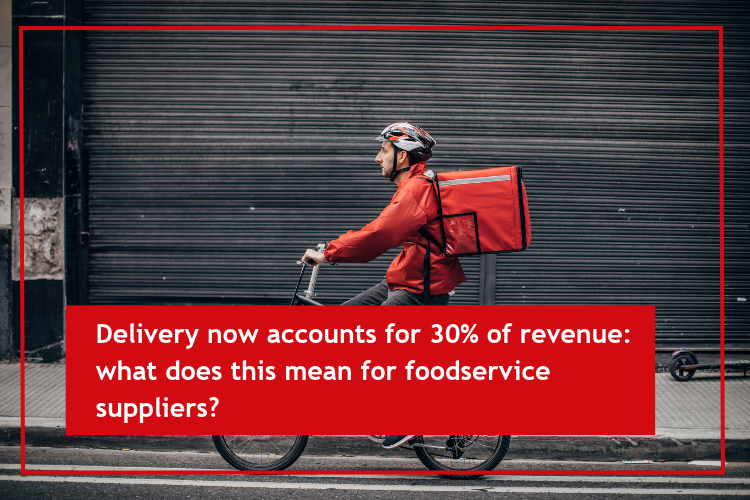
With delivery accounting for around 30% of revenue at bars and restaurants, foodservice suppliers need to consider how their products perform from preparation to the moment they reach the customer. Better-sealed packaging, right-sized portions, pre-portioned ingredients, quick-prep products and items designed to preserve texture and quality during transport are among the adaptations shaping the market.
Contents
- When delivery becomes a significant source of revenue
- Delivery menus are calling for purpose-built products
- Delivery packaging becomes part of product development
- Portion sizes and preservation are reshaping the offering
- Kitchen efficiency is influencing foodservice product development
- Delivery is reshaping the foodservice market
- Frequently asked questions
When delivery becomes a significant source of revenue
Delivery already accounts for 30% of revenue at bars and restaurants in Brazil, according to an Abrasel survey of more than 2,100 establishments. When nearly one-third of revenue comes from meals consumed away from the dining room, factors such as packaging, portioning, preservation and ease of preparation have a direct impact on the customer experience and on purchasing decisions in professional kitchens.
Delivery has become a regular part of consumer habits. Galunion’s Delivery 360 study found that 88% of consumers used the service in 2024. On the business side, 71% of the establishments surveyed by Abrasel in 2025 already offered delivery.
Putting the menu on an app, though, is only one part of the operation. A 2026 Abrasel survey commissioned by 99Food found that 78% of restaurants prepare dine-in and delivery orders on the same production line. One-third have little or no spare capacity during peak hours, while 35% report a drop in food quality at busy times, with delivery orders particularly affected.
Restaurants are responding through changes in the kitchen and in the products they buy. Faster-prep products, different portion sizes, packaging developed for specific types of food and standardized ingredients are becoming part of purchasing decisions for restaurants and suppliers. With delivery accounting for such a significant share of sales, foodservice product development needs to consider what happens between the kitchen counter and the customer’s table.
Delivery menus are calling for purpose-built products
One of the biggest changes is happening on the menu. An iFood report based on Delivery 360 recommends designing dishes and preparation routines specifically for delivery, taking travel time, packaging and preservation into account from the earliest stages of recipe development.
According to the 2025-2026 ABF Annual Foodservice Industry Survey, conducted in partnership with Galunion, 61% of companies had reorganized their menus for digital channels, 56% had reduced the number of items offered and 55% had created proprietary products for the channel.
This reflects a broader push toward leaner, more efficient operations. Among the 2026 trends mapped by Galunion are standardized processes, portfolio reviews and products that balance operational speed with profitability.
These changes directly affect the B2B offering. Pre-portioned proteins, ingredients with predictable yields, bases that eliminate preparation steps, easy-to-use sauces and products that retain their texture inside the packaging address practical challenges in restaurant kitchens. Technical specifications remain essential, but how a product performs during transport is another important consideration.
Needs can vary considerably from one operation to another. With 90% of foodservice brands offering delivery in 2025, from pizzerias and coffee shops to Asian restaurants, requirements are highly diverse:
- Breaded and fried foods: need technologies that help preserve crispness and manage moisture.
- Proteins: can be supplied in ready-to-use cuts and portion sizes, saving preparation time in the kitchen.
- Sauces and side dishes: can use convenient formats for immediate application or separate delivery.
- Desserts and soups: require packaging structures and seals capable of handling leaks and temperature variations.
Delivery packaging becomes part of product development
Choosing the right container has become a strategic part of the product itself. Packaging problems have already caused 51% of consumers to stop ordering from a restaurant, according to research by Galunion and Instituto Qualibest for ABRE, the Brazilian Packaging Association. Missing seals, food arriving out of place and leaks were among the main complaints. Among satisfied customers, 72% highlighted suitable packaging as important for preserving temperature and texture.
The packaging industry is taking an increasingly technical approach to foodservice. A guide published by ABRE with specialists from CETEA/Ital brings together strict criteria for performance, material selection, logistics and usability.
This can be seen in packaging developed for specific delivery needs, including planned ventilation, reinforced sealing systems, dividers and containers designed for different types of food.
Research by iFood and Opinion Box provides a clearer picture of what consumers expect from delivery packaging:
|
Percentage |
What consumers expect from delivery packaging |
|
94% |
Consider effective sealing important |
|
76% |
Value sustainable packaging |
|
71% |
Reject certain types of packaging |
|
≈ 60% |
Would pay R$2 more for sustainable packaging |
|
54% |
Prioritize restaurants that use sustainable packaging |
Source: iFood/Opinion Box survey.
Portion sizes and preservation are reshaping the offering
Portioning has gained new variables with the growth of delivery. The quantity needs to fit the container properly, suit the occasion and remain consistent from one order to the next.
Portion sizes and menu reformulation are among the priorities covered in the ABF/Galunion research, as operators review their portfolios and launch exclusive items. Galunion’s 2026 trends also highlight the search for smaller, more profitable portions in response to rising costs and changing consumer habits among an audience where 92% already orders food for delivery or pickup.
For companies supplying these kitchens, this creates demand for formats designed around actual use. Proteins are already available in standardized portion sizes that reduce handling at the workstation, while pre-portioned ingredients simplify yield control. Bases supplied in different volumes give operators greater flexibility to build combos without adding unnecessary complexity to the process.
Preservation also needs to account for the time between the kitchen and the customer’s table. Delivery 360 found that 62% of consumers consider 15 to 30 minutes the ideal waiting time. Logistics adds a variable that kitchens cannot always control: the actual time between finishing a dish and eating it. Traffic delays happen, so kitchens need products that can maintain their quality even when consumption is delayed. How food behaves in closed packaging, moisture retention, stability and ease of storage have become important factors for buyers choosing the right ingredients.
Kitchen efficiency is influencing foodservice product development
Delivery quality also depends on what happens before an order is picked up. In an Abrasel survey conducted in August 2026, 33% of establishments said they had little or no capacity to absorb additional orders when dine-in and delivery operations run simultaneously. Another 35% reported a decline in quality during peak periods.
The survey also found that 69% do not use systems to organize production, while only 31% rely on some form of digital tool. One response presented at that year’s Salão Abrasel was the concept of Kitchen 4.0, with automation, inventory management and system integration among the alternatives for reorganizing operations.
The search for efficiency is already influencing equipment and products developed for professional kitchens. At international foodservice events, simpler operations, standardized processes and automation have appeared among the trends, alongside technologies capable of dosing, mixing and finishing preparations. In food products, portioned, pre-prepared and quick-finish items can reduce steps and make it easier to maintain consistency during periods of high demand.
With dine-in and delivery orders sharing the same kitchen, keeping up with new products, equipment and preparation formats can make a practical difference to daily operations. The most relevant innovations are those that fit the establishment’s structure and make work easier during peak order periods.
Delivery is reshaping the foodservice market
With delivery accounting for around 30% of revenue at bars and restaurants, product development for this channel now needs to address everything from kitchen operations to transport. Packaging with vapor control or improved sealing, pre-portioned ingredients, faster-prep products, new portion sizes and items formulated to preserve their characteristics in transit show how different parts of the foodservice supply chain are adapting.
Food, beverages, ingredients, packaging and equipment can all be developed or adapted to meet specific delivery needs. Reducing preparation steps, adjusting portion sizes, improving preservation and delivering greater consistency are already influencing what suppliers offer foodservice operators.
These developments also create opportunities for direct exchange between product developers and the professionals who need to incorporate those products into their operations. Trade shows bring these two sides together, giving suppliers the opportunity to present applications, formats and launches to buyers who are reviewing menus and processes.
Anuga Select Brazil, taking place from April 6 to 8, 2027, at Distrito Anhembi in São Paulo, brings food and beverage companies together with professionals from restaurants, chains, hotels, retail, wholesale and distribution. Ingredients designed to improve operational efficiency, new formats, products developed for different consumption occasions and other foodservice innovations can be presented directly to professionals involved in these purchasing decisions.
Does your company have something new to offer the foodservice market? Anuga Select Brazil is an opportunity to present it to buyers and industry professionals looking for new options for their operations.
Want to exhibit your solutions at the next edition? Contact the Anuga Select Brazil team and take part!
Perguntas frequentes
How much of bars' and restaurants' revenue comes from delivery?
Delivery accounts for around 30% of revenue at bars and restaurants in Brazil, according to an Abrasel survey of more than 2,100 establishments.
What should companies consider when developing a product for delivery?
The time between preparation and consumption, preservation, texture, portion size, yield and performance inside the packaging are among the main factors. The product also needs to work within the kitchen's routine, particularly during periods of high order volume.
How should restaurants choose packaging for delivery?
The choice depends on the characteristics of the food and transport conditions. Sealing, moisture control, durability, temperature retention and a size suited to the portion are among the criteria to consider.
Which products can make restaurant delivery operations more efficient?
Pre-portioned ingredients, proteins in standardized portion sizes, quick-prep bases, ready-to-use sauces and products designed to maintain their characteristics during transport can reduce preparation steps and make order consistency easier to maintain.