
Quick summary: The foodservice market is looking for products that combine quality, convenience, good yield and formats suited to different operations, while still bringing something new to the customer experience. Technology, cost control, waste reduction and leaner teams are also shaping purchasing decisions. At Anuga Select Brazil, food and beverage brands can meet buyers from across the market and present solutions that respond to these changing needs.
Contents
-
A Growing Market with New Demands
-
Technology Is Changing Operations In and Out of the Kitchen
-
New Flavors Are Making Their Way onto Menus
-
New Channels Are Changing Purchasing Needs
-
Food Waste and Labor Challenges Are Also Shaping Decisions
-
Understanding the Operation Makes a Difference When Selling
-
When Products and Buyers Join the Same Conversation
-
Frequently Asked Questions
1. A Growing Market with New Demands
Brazil’s foodservice market enters 2026 in a period of growth, but also under increasing pressure to operate more efficiently. The country’s bar and restaurant sector is expected to close the year with R$ 540 billion in revenue, up approximately 9% from the R$ 495 billion recorded in 2025, according to the Brazilian Association of Bars and Restaurants (Abrasel).
This growth highlights the opportunities in the out-of-home dining market, but higher revenue is only one part of the picture. Costs, productivity, labor, food waste and changing consumer behavior continue to influence the decisions foodservice businesses make every day.
Customer expectations have changed as well. A nationwide survey conducted in 2026 found that technology is already part of several stages of the dining journey, while the human side of the experience remains important. Food quality, enjoyment and comfort are among the factors people value when choosing a restaurant, while celebrations, relaxation, family time and socializing remain some of the main reasons for eating out.
Digital tools can make processes faster and simplify parts of the customer journey, but quality, comfort and human interaction still shape the overall experience.
All of this puts greater emphasis on efficiency, cost control and the ability to respond to changing consumer expectations. These shifts affect day-to-day operations and also influence how businesses choose food and beverage products and suppliers.
2. Technology Is Changing Operations In and Out of the Kitchen
Long before customers see a digital menu or open a delivery app, much of the technological transformation in foodservice is happening behind the scenes.
Inventory, purchasing, costs, production, waste and financial performance can now be managed in increasingly integrated ways. With more information at their fingertips, managers can spot problems, anticipate needs and make decisions faster.
This level of control becomes particularly important in a growing market that remains under pressure from costs and tight margins. A report released in 2026 by the Brazilian Food Industry Association (ABIA) points to the increasing professionalization of Brazil’s foodservice market, alongside the adoption of management technologies and more strategic use of data.
Digitalization is also changing customer service. QR codes, apps, self-service kiosks, ordering systems and digital payments can shorten the process and give customers greater autonomy. Human interaction, however, remains important when customers need guidance, personalization or direct contact with staff.
Artificial Intelligence brings another layer to this transformation. Data analysis, demand forecasting, consumption pattern identification and personalized offers are among the applications that can support everyday decision-making.
In the kitchen, more accurate inventory and production control can reduce losses and improve ingredient management. Automating certain tasks also frees up staff to focus on other parts of the operation.
These changes are influencing how products themselves are evaluated. Solutions that simplify processes, offer greater predictability or improve yield can deliver value that goes beyond the ingredient itself.
3. New Flavors Are Making Their Way onto Menus
The experience a business offers is also shaped by what reaches the table. Flavor, presentation, ingredient sourcing and versatility all contribute to the menu and help give each establishment its own identity.
Regionality is becoming part of this conversation as well. A Mintel survey found that 26% of consumers would be willing to pay more for dishes prepared with local or regional ingredients. Another 23% cited locally produced ingredients as a reason to spend more on a meal.
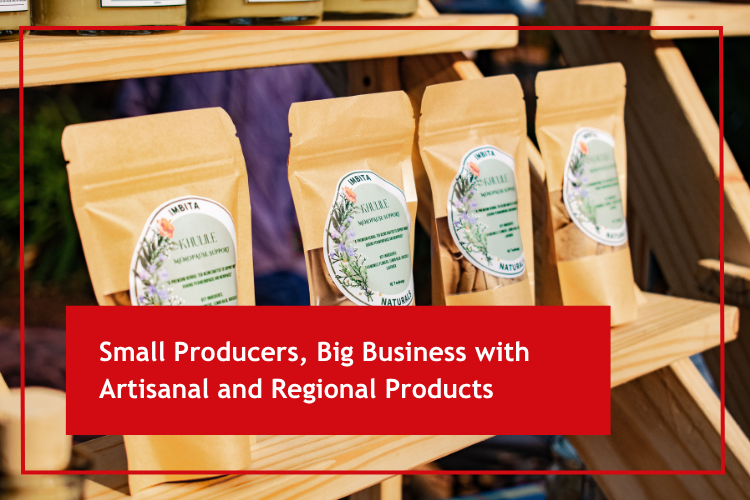
This interest creates opportunities for artisanal products, Brazilian ingredients and foods associated with specific regions. They can feature in signature recipes, concepts that highlight Brazilian flavors or simply offer something new to businesses looking to refresh their menus.
Information about sourcing, production methods and possible applications can also strengthen the commercial presentation of a product. Showing where an ingredient fits on the menu and what sets it apart makes conversations with buyers more practical and more closely connected to their business needs.
4. New Channels Are Changing Purchasing Needs
Brazil’s foodservice market recorded 5.6 billion visits in the first quarter of 2025 alone, according to Circana data published by ABIA. The figures cover several consumption occasions, including dine-in, takeaway and delivery, in a market that generated R$ 61.3 billion during the period.
Consumers now interact with foodservice businesses in many ways. A restaurant may serve dine-in customers, prepare delivery and takeaway orders and cater for events. In hospitality, breakfast, restaurants, bars and room service can all be part of the same operation.
Each situation can place its own demands on a product. A sauce served in the dining room, for example, may require a different pack size or portioning format when used for high-volume delivery orders. A smaller team may prefer pre-processed products that reduce preparation steps. A multi-unit chain, on the other hand, needs consistency to deliver the same result across all its locations.
Portion sizes, packaging, shelf life, yield, ease of preparation and standardization all play a role in purchasing decisions. Ready-to-use and semi-prepared products can also be attractive when they simplify the workload without compromising the final result.
It is worth considering exactly where and how a product will be used. Dine-in service, delivery, hospitality and events may require different formats, volumes and product characteristics, even within the same business.
5. Food Waste and Labor Challenges Are Also Shaping Decisions
Discarded food, over-ordering, improper storage and preparation mistakes all increase costs. Portions suited to actual demand, good shelf life and clear storage and expiration information can reduce losses and make inventory easier to manage.
Origin, traceability, packaging and production methods can also factor into the decision, particularly when this information is part of the establishment’s positioning and is communicated to customers.
Labor adds another challenge to day-to-day operations. Recruiting and retaining staff remains difficult for the sector, and smaller teams need to handle multiple demands without sacrificing speed or consistency in the kitchen.
Consider a kitchen preparing dozens of portions of the same dish during lunch service. An ingredient that arrives already cleaned, cut or portioned eliminates part of the preparation work, improves consistency between servings and can also reduce leftovers. At scale, saving even a few minutes on each preparation can make a noticeable difference to the team’s routine.
This convenience can come from portioned, pre-processed or easy-to-use ingredients, as well as products designed to deliver consistent results every time. Yield and price remain important purchasing considerations, but preparation time and how efficiently the product can be used also influence the final decision.
What Can Make a Difference When Choosing a Foodservice Supplier?
| Operational need | What can make a difference when choosing a supplier |
| Reduce waste | Appropriate portion sizes, better product utilization and clear storage information |
| Improve efficiency | Ready-to-use or pre-processed products that reduce preparation steps |
| Maintain consistency | Batch-to-batch consistency, technical specifications and quality control |
| Control costs | Price predictability, suitable formats and commercial terms |
| Create new dishes | Distinctive ingredients, seasonal products and solutions that support innovation |
| Serve different customer profiles | A range of formats, sizes and product characteristics |
| Communicate origin | Traceability, certifications and information about production |
| Ensure reliable supply | Delivery capacity, consistency and a solid distribution structure |
6. Understanding the Operation Makes a Difference When Selling
Understanding how a product will actually be used is a good place to start. Where will it be stored? How long does it take to prepare? Does it require specific equipment? What yield does it deliver? Will it perform consistently during peak service?
The answers turn technical product features into selling points that are much more relevant to the buyer’s day-to-day reality.
Meeting a new demand does not always require developing an entirely new product. A different package, another portion size, a longer shelf life or simpler preparation may be enough to make an existing item better suited to a particular channel.
Price remains part of the decision, but it does not need to be considered in isolation. Yield, consistency, ease of preparation, waste reduction and reliable supply all affect the true cost of running an operation.
Staying close to buyers also makes it easier to identify emerging needs. Sometimes a market shift first appears as a problem raised by a customer and only later develops into a broader need across the sector.
7. When Products and Buyers Join the Same Conversation
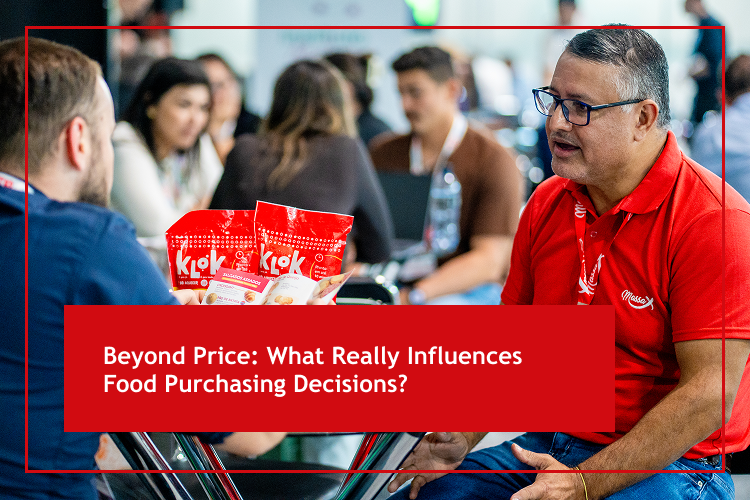
Understanding the market also means being present where purchasing decisions happen. B2B trade shows put new products in front of professionals who are actively looking for suppliers, following launches and evaluating solutions for their businesses. Direct contact also brings out needs that rarely surface in a sales presentation made from a distance.
Anuga Select Brazil provides this environment for the food and beverage market. Food manufacturers, retailers, distributors, wholesalers, foodservice operators, hospitality businesses and supermarkets all take part, giving brands multiple ways to present their portfolios and meet potential partners.
The figures from the latest edition show the scale of these connections. In 2026, the event welcomed more than 14,000 visitors and over 550 exhibiting brands. The Mega Business Round brought together more than 300 companies for approximately 3,000 meetings with around 120 major Brazilian and international buyers, generating R$ 150 million in business.
The matchmaking program directs meetings according to participants’ commercial interests, allowing companies to present their products to buyers who are already looking for new options for the market.
From April 6 to 8, 2027, at Distrito Anhembi in São Paulo, Anuga Select Brazil will once again bring brands and buyers together.
What if your product is the next one to catch their attention? Click here to exhibit at Anuga Select Brazil.
Perguntas frequentes
What are the main foodservice trends in 2026?
Technology, data-driven management, operational efficiency, personalization, waste reduction and a stronger focus on human experiences are among the key developments shaping foodservice. Labor shortages and cost pressures are also increasing demand for simpler, more productive processes.
What do restaurants, hotels and bars look for in suppliers?
Needs vary by operation, but factors such as quality, reliable supply, yield, shelf life, consistency, convenience, suitable formats and commercial terms can all influence supplier selection.
How can a company sell to the foodservice market?
Understanding how the establishment operates is a good starting point. Knowing how a product will be stored, prepared and served makes it easier to build a proposal that fits the buyer’s needs. Relationships with buyers and distributors, as well as participation in B2B events, can also create new business opportunities.
How can companies find food and beverage buyers?
Professional trade shows, business rounds and matchmaking programs connect suppliers with buyers from restaurants, hotels, foodservice chains, retail, wholesale and distribution. Anuga Select Brazil brings these audiences together, with its next edition taking place from April 6 to 8, 2027, at Distrito Anhembi in São Paulo.