

The food industry is undergoing a period of rapid transformation. Advances in Artificial Intelligence, evolving regulatory requirements, and the growing demand for more sustainable supply chains are influencing everything from product development to the way manufacturers, distributors, and exporters operate.
By adopting technologies that analyze data, optimize processes, and support strategic decision-making, companies are operating in a business environment where the European Union and other international buyers continue to strengthen requirements related to food safety, traceability, and reducing the environmental impact of packaging. Together, these developments are reshaping the industry and reinforcing the need to balance innovation, operational efficiency, and regulatory compliance.
For Brazilian companies, keeping pace with these changes is essential not only to access the European market but also to meet the expectations of buyers that increasingly apply similar standards in their purchasing decisions.
How Artificial Intelligence is changing the food industry
The growing adoption of Artificial Intelligence shows that the technology is becoming an integral part of the food sector. Research cited by the Capgemini Research Institute indicates that around 40% of food and beverage companies already use AI in some capacity, while many others are testing generative AI applications.
For many years, developing a new food product or reformulating an existing recipe required extensive laboratory testing, ingredient evaluations, and lengthy development cycles before reaching supermarket shelves. With AI, part of this work can now be accelerated through simulations capable of analyzing ingredient combinations, nutritional profiles, consumer preferences, and emerging market trends. The result is a more agile development process that significantly shortens the time between an idea and its commercial launch.
The benefits extend far beyond research and development. Intelligent tools help companies identify consumption patterns, forecast demand, optimize inventory, and monitor performance indicators in real time. In an industry affected by fluctuating raw material costs and rapidly changing consumer behavior, access to organized data and more accurate insights provides a significant competitive advantage.
As its applications continue to expand, Artificial Intelligence is becoming a strategic asset across the food supply chain. According to a 2026 market estimate, the AI market for food and beverages is expected to grow from US$18.34 billion in 2026 to US$88.37 billion by 2031, representing a compound annual growth rate of 36.96%. This growth becomes even more significant as major trading partners introduce increasingly demanding regulatory requirements.
What changes in the European Union are impacting the food industry
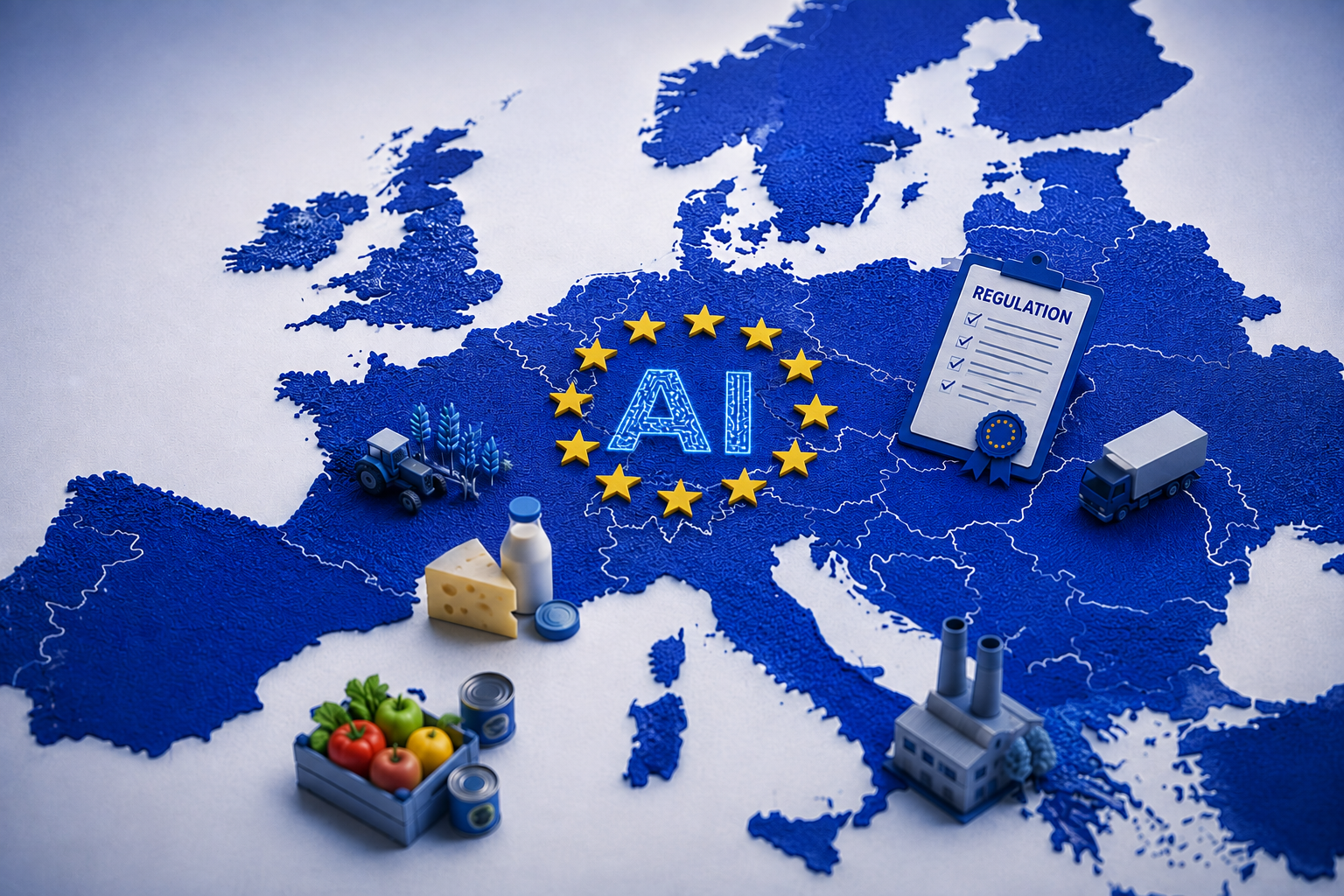
More sustainable packaging, stricter traceability requirements, and tighter rules for animal products are among the main regulatory changes adopted by the European Union that are already affecting the food industry. Manufacturers and exporters doing business with the bloc must adapt to these requirements to meet buyer expectations and remain competitive in international markets.
One of the latest developments is the Packaging and Packaging Waste Regulation (PPWR), which introduces measures to reduce single-use packaging and encourage reusable and recyclable solutions. Among its provisions is the restriction on single-use plastic packaging intended for on-site consumption in bars, restaurants, and hotels, including traditional sachets for ketchup, mayonnaise, mustard, sugar, salt, olive oil, and other condiments. The new rules encourage the use of reusable dispensers and shared containers, reducing waste in a sector that consumes millions of small packaging units every year.
The changes extend beyond the food service sector. Animal products exported to the European Union must comply with strict requirements related to antimicrobial use, sanitary controls, and production traceability. Exporters of meat, poultry, eggs, seafood, and honey are required to demonstrate compliance throughout different stages of the supply chain by maintaining detailed records on suppliers, animal feed, farming practices, and batch histories.
Taken together, these measures reinforce that competing in international markets requires processes capable of ensuring quality, traceability, food safety, and regulatory compliance throughout production.
How technology and regulation work together
As requirements for traceability, food safety, and sustainability become more demanding, the need for reliable information throughout the supply chain also increases. This is where Artificial Intelligence becomes even more valuable.
AI-powered tools help companies organize large volumes of data, identify inconsistencies, and monitor processes in an integrated way. Across operations involving suppliers, manufacturing, logistics, and distribution, these technologies reduce errors, improve decision-making, and simplify compliance with increasingly rigorous standards.
By automating data analysis and making information more accessible, Artificial Intelligence strengthens companies’ ability to respond quickly to audits, verify the origin of raw materials, and maintain detailed records throughout the production process. One example comes from Kraft Heinz, which has adopted AI to support new product development, analyze consumer preferences, and optimize operational processes, demonstrating how the technology is becoming part of the strategic operations of leading food manufacturers.
This combination of technological innovation and evolving regulations highlights that competitiveness in the food industry is increasingly linked to the ability to develop high-quality products, maintain safe processes, and ensure transparency across operations. For Brazilian companies, it also creates new opportunities to strengthen their presence in international markets.
What these changes mean for Brazilian companies
The impact of these transformations is already being felt by Brazilian businesses. Investments in technology, traceability, and sustainability strengthen competitiveness, expand export opportunities, and contribute to stronger commercial relationships with buyers who value transparency and compliance.
Keeping an eye on these trends also means anticipating the industry’s next moves. Regulations introduced by major consumer markets often become benchmarks for other countries, driving
new practices across the global food supply chain. Companies that prepare early gain more time to adapt processes, develop new solutions, and respond quickly to evolving market demands.
Specialized trade events reflect this evolution by bringing together manufacturers, retailers, distributors, importers, and suppliers to discuss the trends shaping the future of food. Beyond showcasing product launches, these events create opportunities to exchange knowledge, discover emerging technologies, and gain deeper insights into the changes transforming the entire food supply chain.
Anuga Select Brazil brings together professionals from across the food supply chain to discuss innovation, sustainability, technology, and the trends shaping the industry in Brazil and around the world. In its latest edition, the event welcomed more than 14,000 visitors, featured 550 exhibiting brands, and hosted representatives from 96 countries, reinforcing its position as one of the industry’s leading business and networking events.
Want to discover the technologies and trends shaping the future of the food industry?
Click here to learn how you can take part in the next edition of Anuga Select Brazil.